The detachable fiber optic panel for EDFA (Erbium-Doped Fiber Amplifier) is a modular fiber optic connection component integrated with EDFA functions in optical communication systems. Its advantages are mainly reflected in multiple aspects such as flexibility, maintenance convenience, and system scalability, as follows:
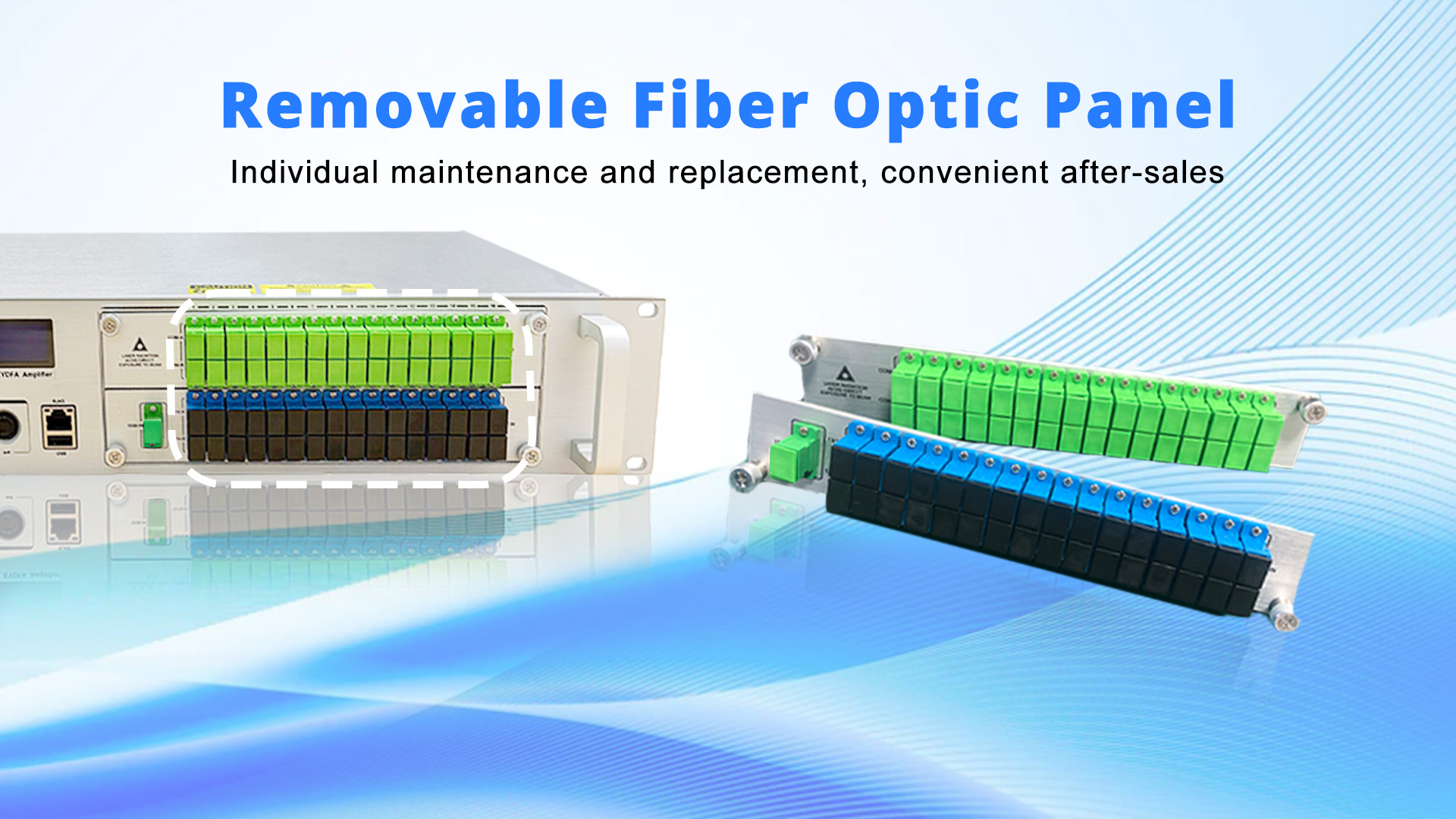
- Convenience of Maintenance and Replacement
- Quick disassembly and replacement: The detachable design allows the EDFA module or fiber optic panel to be taken out or replaced individually without interrupting the operation of the entire system. For example, when the EDFA fails, there is no need to disassemble the entire optical path system; instead, the panel connection can be disconnected for replacement, which greatly shortens the maintenance time and reduces the risk of system downtime.
- Simplified troubleshooting: The modular structure enables more accurate fault location. If the optical signal amplification is abnormal, the EDFA module can be replaced to quickly determine whether the problem lies with the amplifier itself, reducing the troubleshooting process.
- Flexibility of System Configuration
- Adapting to different scenario requirements: According to the needs of transmission distance, signal power, etc., EDFA modules with different gains and powers can be flexibly replaced. For instance, in long-distance transmission scenarios, a high-gain EDFA can be used; for short-distance scenarios, a low-noise model can be selected, without the need to redesign the entire optical path structure.
- Compatibility with multiple fiber optic interfaces: Detachable panels usually support a variety of standard fiber optic interfaces (such as LC, SC, FC, etc.), which can be adapted to different types of fiber optic links and improve compatibility with other devices.
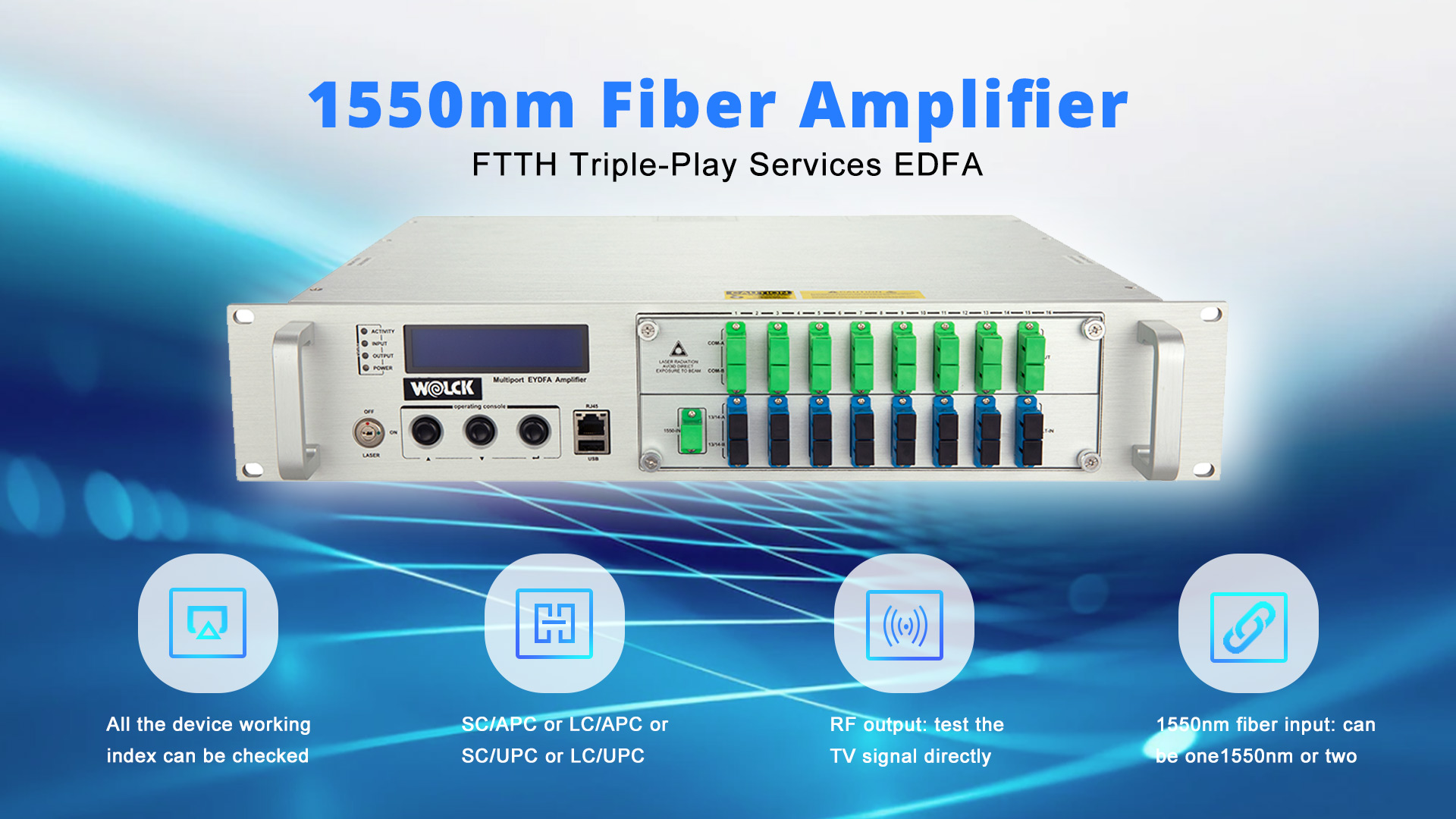
- Convenience of Scalability and Upgrading
- Supporting system expansion: When the optical communication network needs to increase transmission capacity (such as increasing the number of wavelengths), the detachable panel can easily connect new EDFA modules or expand fiber optic links without large-scale transformation of the original system.
- Adapting to technological upgrades: With the iteration of EDFA technology (such as more efficient pump sources and designs with lower noise figures), system performance can be upgraded by replacing modules, extending the service life of the overall equipment, and reducing the total life-cycle cost.
- Reducing Operational Complexity and Cost
- Reducing optical path adjustment costs: Traditional EDFAs with fixed structures require re-calibration of parameters such as fiber alignment and power matching during installation or replacement, which is complex to operate and easily introduces losses. The detachable panel, through standardized interface design, can realize "plug-and-play", reducing manual debugging costs.
- Efficient spare parts management: The modular design makes spare parts inventory more flexible. There is no need to customize dedicated components for different systems; instead, only general EDFA modules or panels need to be stocked, reducing inventory costs.
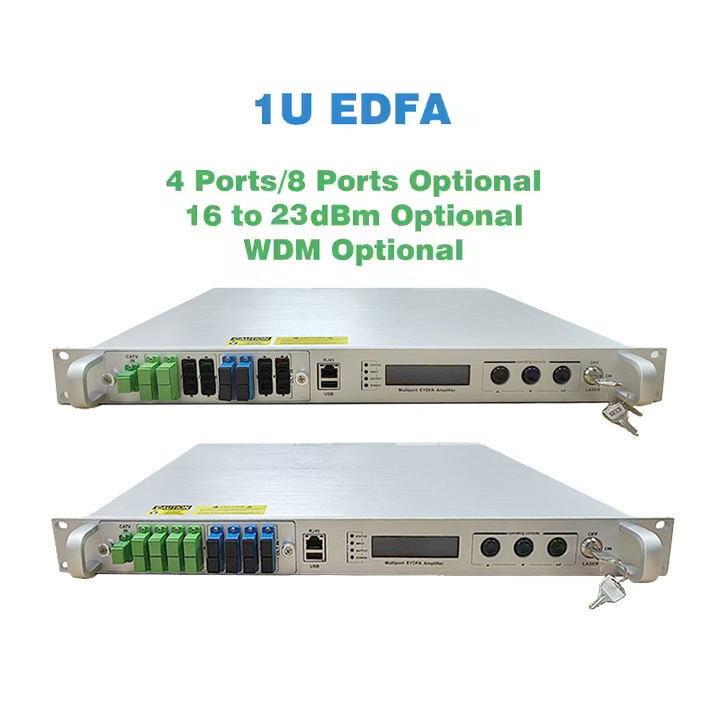
- Improving System Reliability
- Isolating the impact of faults: The detachable structure can physically isolate the EDFA module from other optical path components, reducing the risk of fault diffusion. For example, if there is an abnormal loss at the panel interface, the panel can be replaced individually, avoiding impact on the core amplification function of the EDFA.
- Facilitating daily monitoring: Some detachable panels integrate optical power monitoring ports, which can be easily connected to devices such as optical power meters to monitor the input/output power of the EDFA in real-time and detect abnormalities in a timely manner for adjustment.
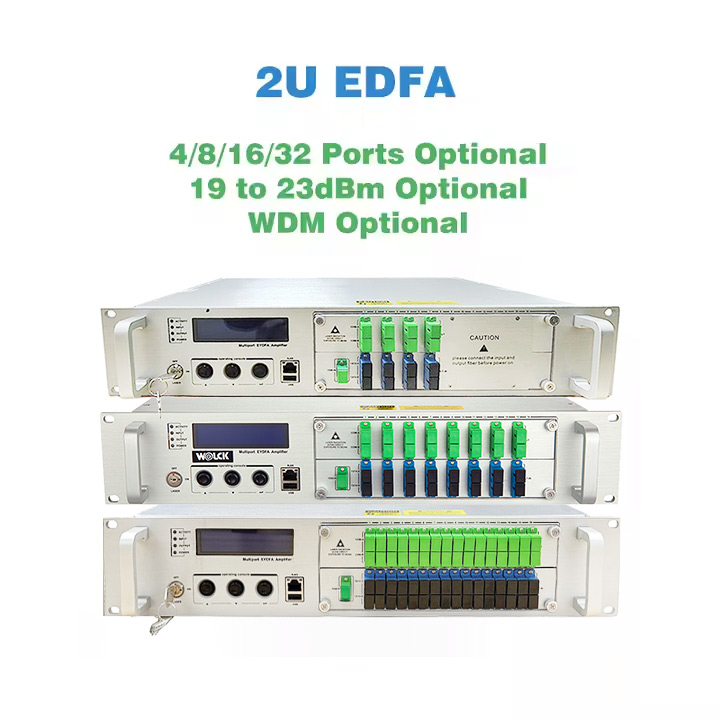
Summary
Through modular and standardized design, the detachable fiber optic panel for EDFA is significantly superior to fixed structures in terms of maintenance efficiency, configuration flexibility, and cost control. It is particularly suitable for large-scale optical communication networks (such as backbone networks and data center interconnections) that have high requirements for reliability and scalability, and is an important component for improving the operation and maintenance efficiency of optical transmission systems.
 Redefines Compact FTTH Deployment
 Data Center Solution: Wolck at SVIAZ 2026
 Compact Fiber Access OLT Launch
 Configure OLT Through WEB Management

