In the context of the rapid development of modern communication networks, the Optical Network Unit (ONU) has become a key terminal device in Fiber to the Home (FTTH) networks due to its powerful functions. Among them, the integration of the CATV (Cable Television) function has achieved a deep fusion of traditional TV signal transmission and advanced optical communication technologies, bringing users rich audio-visual experiences and convenient services.
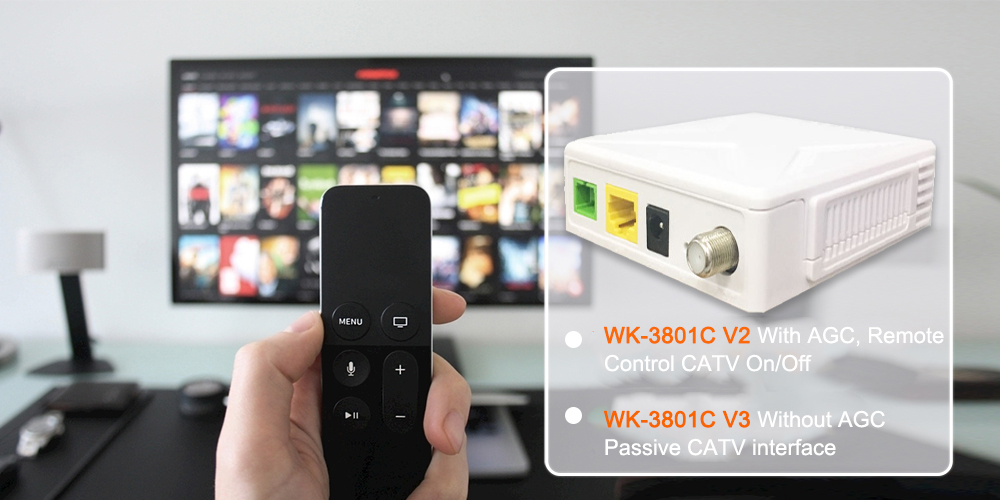
I. Technical Principles of the CATV Function
The CATV function in ONU mainly relies on Wavelength Division Multiplexing (WDM) technology. In optical fiber transmission, optical signals of different wavelengths can be transmitted independently in the same optical fiber without interference. Typically, data services use wavelengths of 1310nm and 1490nm for transmission, while CATV signals use the 1550nm wavelength. The choice of 1550nm for CATV signals is because this wavelength has a relatively low transmission loss in optical fibers, and external modulation techniques, such as a Distributed Feedback (DFB) laser combined with a Lithium Niobate (LiNbO₃) modulator, can be used to load analog or digital TV signals onto the optical carrier. This external modulation method can effectively reduce signal distortion and ensure high-quality transmission of TV signals.
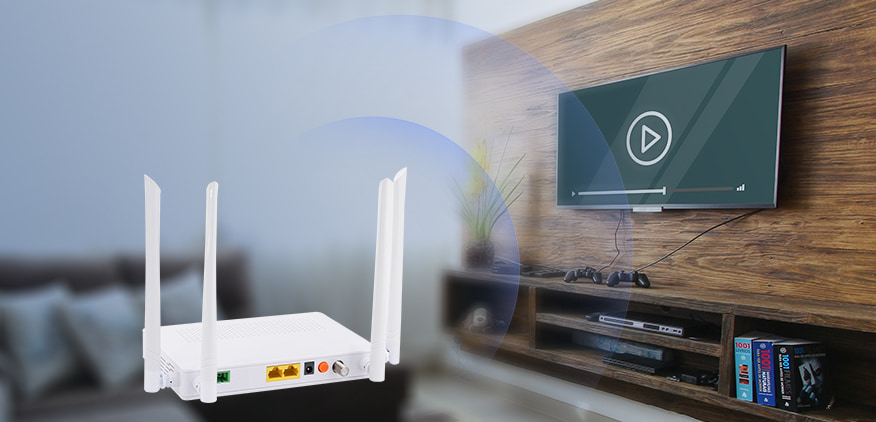
II. Processing Flow of CATV Signals in ONU
- Optical Signal Reception and Separation: The ONU precisely extracts the 1550nm CATV optical signal from the optical fiber through the built-in WDM filter. The WDM filter has high selectivity, which can separate optical signals of different wavelengths, ensuring that the CATV signal does not interfere with other data signals and guaranteeing the accuracy of signal processing.
- Opto-Electrical Conversion and Amplification: The extracted CATV optical signal enters the opto-electrical conversion module inside the ONU. In this process, PIN or APD photodiodes convert the optical signal into an electrical signal. Since the optical signal will attenuate to a certain extent during long-distance transmission, the converted electrical signal is weak. Therefore, it needs to be amplified by a Low-Noise Amplifier (LNA) to increase the signal strength, meeting the requirements of subsequent signal processing and display, and ensuring the clarity and stability of the TV picture.
- RF Output and Adaptation: The amplified electrical signal is further converted into a Radio Frequency (RF) signal. The ONU outputs this RF signal through a coaxial cable interface (such as an F-type connector) and connects it to the user's TV terminal. During the signal conversion process, the ONU supports standard modulation methods such as QAM (Quadrature Amplitude Modulation). QAM modulation can transmit more data within a limited bandwidth, improving signal transmission efficiency. It is also compatible with traditional CATV terminal devices, ensuring that users can receive high-definition and stable TV programs without replacing their TVs.
-
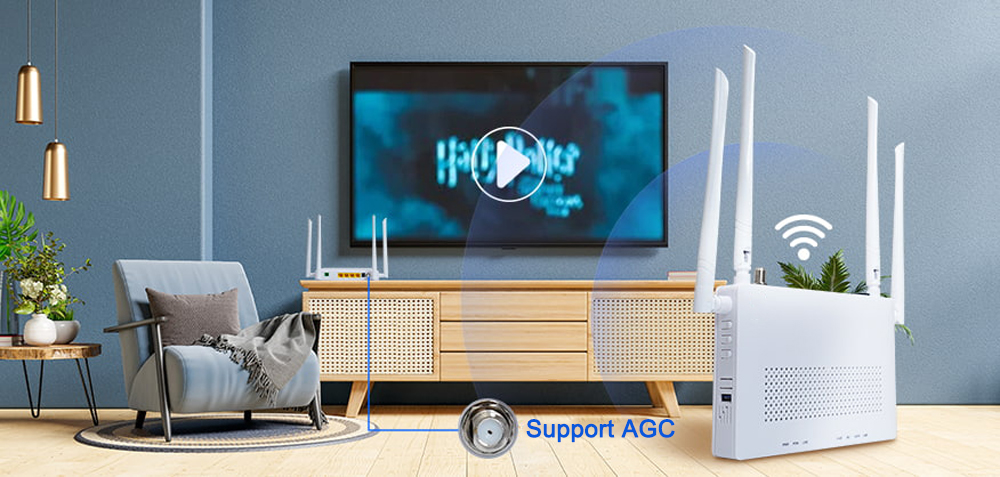
III. Performance Advantages of the CATV Function
- Triple-Play Integration: The ONU integrates data, voice, and CATV services, achieving "Triple-Play". This integrated design greatly reduces the complexity of home cabling. Users can enjoy high-speed Internet, voice calls, and a rich variety of TV programs through just one ONU device, reducing network deployment costs and improving the convenience and practicality of home networks.
- Real-time Performance and Stability: CATV signals are transmitted independently of the IP network and are not affected by fluctuations in network bandwidth. When watching live TV programs, problems such as buffering and delays caused by network congestion will not occur, providing users with a smooth and stable real-time viewing experience and meeting users' requirements for high-quality TV services.
- Support for High-Definition and Ultra-High-Definition: With the development of video technology, users' demand for high-definition and ultra-high-definition videos is increasing. The CATV function of ONU can effectively increase the transmission bandwidth and data capacity by using advanced modulation techniques such as QAM-256, supporting the transmission of 4K, 8K and other ultra-high-definition program content, bringing users a more vivid and clear visual experience and promoting the high-definition development of the television industry.
-
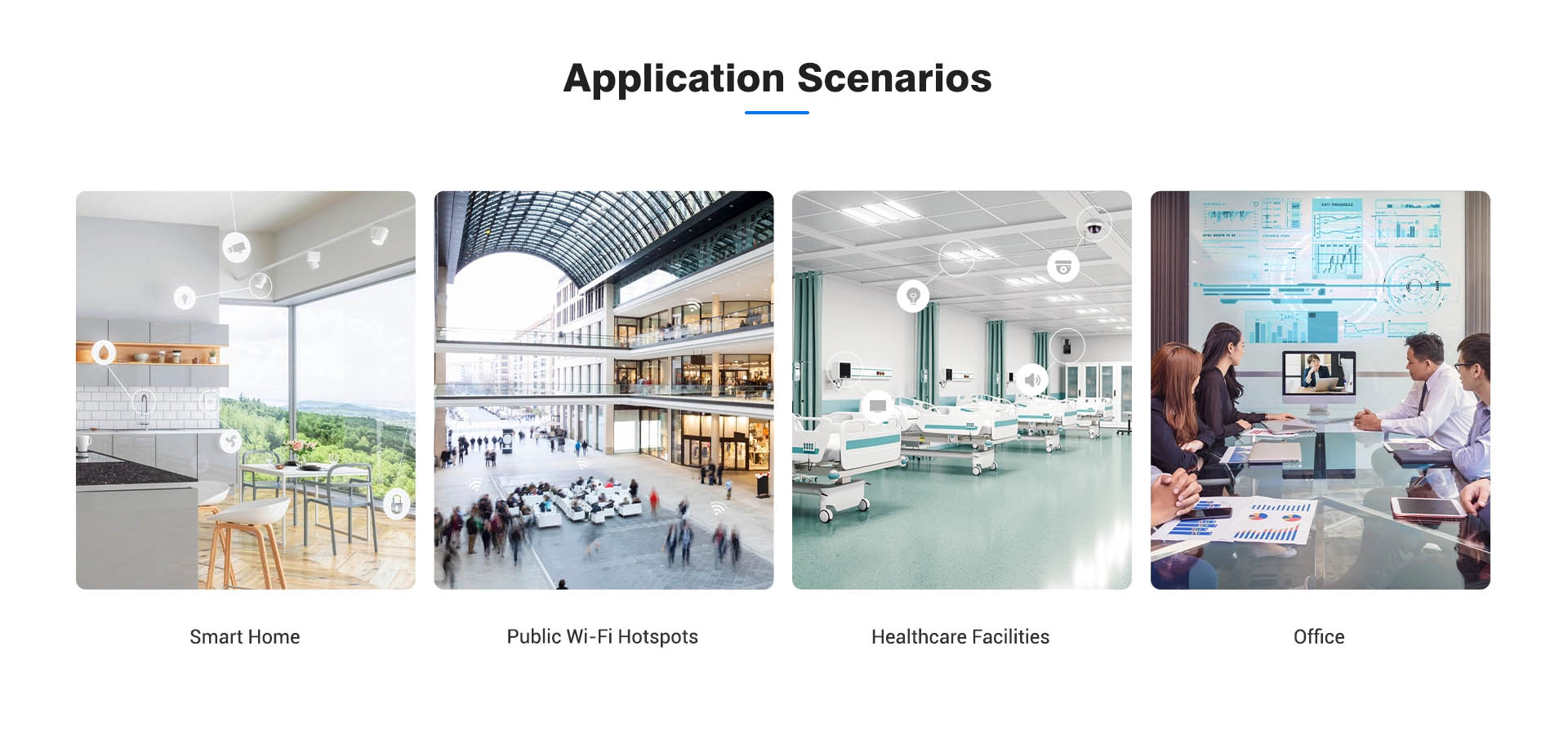 IV. Application Scenarios of the CATV Function
- Home User Scenarios: In the home network environment, the CATV function of ONU is an important means for operators to provide comprehensive services to users. Operators represented by China Telecom and China Unicom use the "fiber + coaxial" hybrid networking scheme to achieve the simultaneous access of high-speed broadband and traditional TV services through ONU. Users can enjoy high-speed Internet surfing while watching a wide variety of TV programs, meeting the dual needs of home entertainment and information acquisition.
- Commercial Application Scenarios: The CATV function of ONU also plays an important role in commercial places such as smart communities, hotels, and hospitals. In smart communities, in addition to providing basic TV services, functions such as video surveillance, smart home control, and community announcements can also be integrated to achieve intelligent community management; in the hotel industry, through the CATV function of ONU, hotels can provide guests with personalized TV program services, and at the same time, push hotel promotions, advertisements, room service information, etc., improving the hotel's service quality and brand image; in the hospital scenario, the CATV function can be used for medical knowledge popularization, patient entertainment, etc., enriching the inpatient life of patients.
 IV. Application Scenarios of the CATV Function
 Redefines Compact FTTH Deployment
 Data Center Solution: Wolck at SVIAZ 2026
 Compact Fiber Access OLT Launch
 Configure OLT Through WEB Management
